
















Home
 Video
English
Video
English

Video
English
English
 Artificial intelligence is no longer the stuff of science fiction — it is deployed on real battlefields, selects targets for air strikes, and shapes the course of conflicts in Ukraine and Gaza. Here is an overview of what we actually know about the military use of AI, and why this debate should not remain the exclusive domain of generals and diplomats.
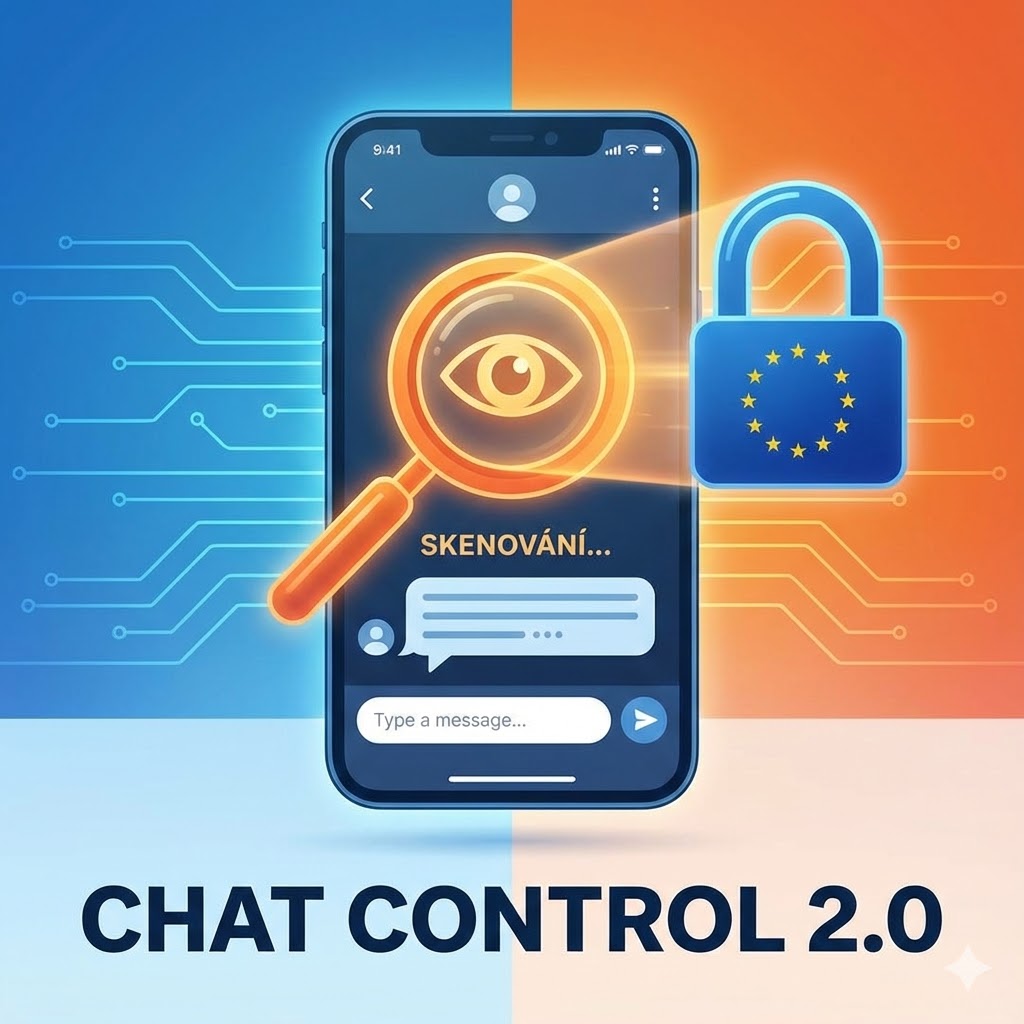 In recent days, the Council of the European Union (representatives of the Member States) has backed a controversial draft regulation known as Chat Control 2.0. Its aim is to combat the spread of child sexual abuse material (CSAM), but the way it seeks to achieve this has stirred strong reactions among cybersecurity experts and privacy advocates. What exactly does this proposal mean for ordinary users, and how does it relate to the recent call by Members of the European Parliament to ban social networks for children under 16?
 Artificial intelligence has become a common part of our lives – it helps us translate texts, create images, and organize tasks. However, with its rapid development, new threats have emerged that we could hardly imagine just a few years ago. One of the most serious is the phenomenon known as deep nudes. These are fake nude photographs created by artificial intelligence from ordinary images of people. Unfortunately, this trend does not affect only adults but increasingly also children and adolescents. The psychological impact on victims can be devastating.
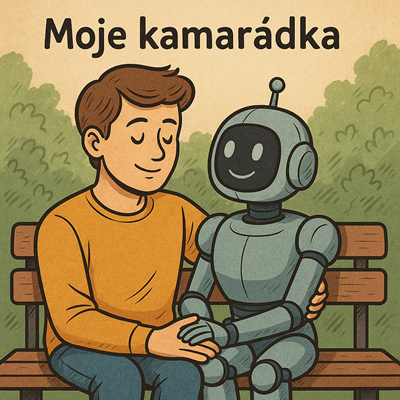 AI chatbots are no longer just assistants. They are becoming companions, friends – and sometimes even partners. What may seem like comfort for the lonely can be a problem for children and teenagers. AI will never reject us. But real life isn’t like that. Are we heading into a future where it will be easier to love a machine than a human?
 There are places on the internet that at first glance appear to be forums for sharing male experiences and support among men. In reality, however, they often spread hatred towards women, contempt for girls, and rejection of equality. These communities are collectively referred to as the manosphere and can be very dangerous for adolescent boys.
 In recent years, the OnlyFans platform has attracted unprecedented attention. Some see it as a revolution in online entertainment, while others warn of potential risks associated with explicit content and the lack of protection for underage users. So, what is the allure (and danger) of this platform that attracts millions of people worldwide? And why should we be cautious about who uses it and how?
 Mystery boxy se v posledních letech staly obrovským hitem, zvláště mezi mladými lidmi. Tato online zábava, kdy si uživatel zakoupí krabici s neznámým obsahem, ale nese značná rizika a mnozí odborníci ji dokonce považují za formu hazardu. Jaká nebezpečí se za mystery boxy skrývají?
 Perhaps you have also come across these pages on Facebook - a beautiful photograph of a foreign city labeled as Moscow, Sevastopol, or another Russian city. In reality, it is a completely different place - perhaps from Spain, Brazil, the USA, or the UK - and the label and description are entirely fabricated. Similarly, photos of beautiful women in military uniforms create the impression that they are members of the Russian army. But... appearances can be deceiving; it is actually a hoax.
 One of the key features of large language models of generative artificial intelligence is their ability to converse with us through natural human language. This naturally leads us to personify these AI tools and attribute human traits to them – it becomes our virtual assistant, persona, friend, helper, and in many cases, even companion. AI conversational tools compete effectively with living people, raising the question of whether in the near future they might largely replace human conversation – after all, AI does not argue, apologizes, avoids conflict, does not explode with emotions, motivates us, praises us, is not aggressive, and we don’t have to apologize to it, among other things.
 In today's digital world, manipulative techniques are becoming an increasingly common part of public communication, particularly in pre-election campaigns and often fraudulent advertising. The E-Bezpečí team from the Faculty of Education, Palacký University in Olomouc, is offering an innovative solution – the FactNinja application. This unique tool, powered by the advanced GPT-4 Omni artificial intelligence model, allows for fast and efficient analysis of graphical content to uncover manipulative techniques, argumentative fallacies, and other unethical practices aimed at influencing public opinion.
 Recently, artificial intelligence, especially tools like ChatGPT, Gemini, and Copilot, have become not only the focus of interest for technology enthusiasts but also the target of scammers who exploit its popularity to spread malware and phishing. This trend is worrying, as the increasing interest in AI also increases the number of people who fall for false promises of easy profit or problem-solving using these advanced technologies.
Komentáře
Komentář: Svoboda projevu bez odpovědnosti je jen chaos. Jak vyřešit anonymitu na internetu?
09.12.2025
Klasické páteční odpoledne
01.06.2024
Komentář: Dozvuky tragédie na FF UK, schvalování střelby, výhrůžky a další porce nenávisti
30.12.2023
Articles in English
Umělá inteligence (AI)
Articles in English
Nejčtenější články za posledních 60 dní
Regulace mobilních telefonů ve školách: Právní rámec, procesní postupy a metodika MŠMT
Odborné stanovisko k návrhům na plošný zákaz sociálních sítí pro děti
Zakázané ovoce chutná nejlíp, aneb Proč děti láká zakázaný obsah v online světě
Praxe z první linie: Jak řešíme kyberšikanu, sexting a další online rizika v naší poradně
Komentář: Potřebujeme v současnosti zakázat používání mobilů ve škole zákonem?
Oblíbené štítky








Ocenění projektu E-Bezpečí

KYBER Cena 2023
(1. místo)
Nejlepší projekt prevence kriminality na místní úrovni 2023
(1. místo)
Evropská cena prevence kriminality 2015
(1. místo)
KYBER Cena 2023
(1. místo)
Nejlepší projekt prevence kriminality na místní úrovni 2023
(1. místo)
Evropská cena prevence kriminality 2015
(1. místo)
Partneři a spolupracující instituce
Generální partner projektu E-Bezpečí

Další partneři a spolupracující instituce


















Portál E-Bezpečí provozuje Institut výzkumu a vzdělávání v oblasti digitálních technologií a kyberbezpečnosti,
Pedagogická fakulta Univerzity Palackého v Olomouci (c) 2008-2026

ISSN: 2571-1679. Název: E-Bezpečí
Databáze textů E-Bezpečí (volume, issue)
E-Bezpečí je ochrannou známkou chráněnou Úřadem průmyslového vlastnictví.
www.prvok.upol.cz | www.kybersikana.cz | www.sexting.cz | www.kybergrooming.cz | www.netolismus.cz | www.factninja.cz
Toto dílo podléhá licenci Creative Commons Uveďte původ-Neužívejte komerčně-Nezpracovávejte 4.0 Mezinárodní License.

E-Bezpečí je neziskový nekomerční projekt. Podpořit nás můžete třeba pomocí PayPal.